
GUTTER INSTALLATION IN COLUMBIA, SC
Gutter installation in Columbia, SC planned around your roofline, architectural style, and available discharge space. Explore profiles, capacity, and custom runs formed on site.
Gutter installation in Columbia, SC should fit both the roof and the property around it. At The Guttermen, we work with everything from established neighborhood homes and historic architecture to newer residences and commercial buildings, so we do not approach every roofline with the same gutter profile or drainage layout.
Columbia’s denser neighborhoods can create installation questions that are easy to overlook. Downspouts may need to work around walkways, driveways, HVAC equipment, landscaping, or nearby property lines.
Architecture matters too. The right system needs enough drainage capacity without looking out of place on the building.
Compare the broader options in our Columbia gutter services guide, or learn what to ask a Columbia gutter company before work begins.
How Should Columbia's Architecture Influence Your Gutter Profile?
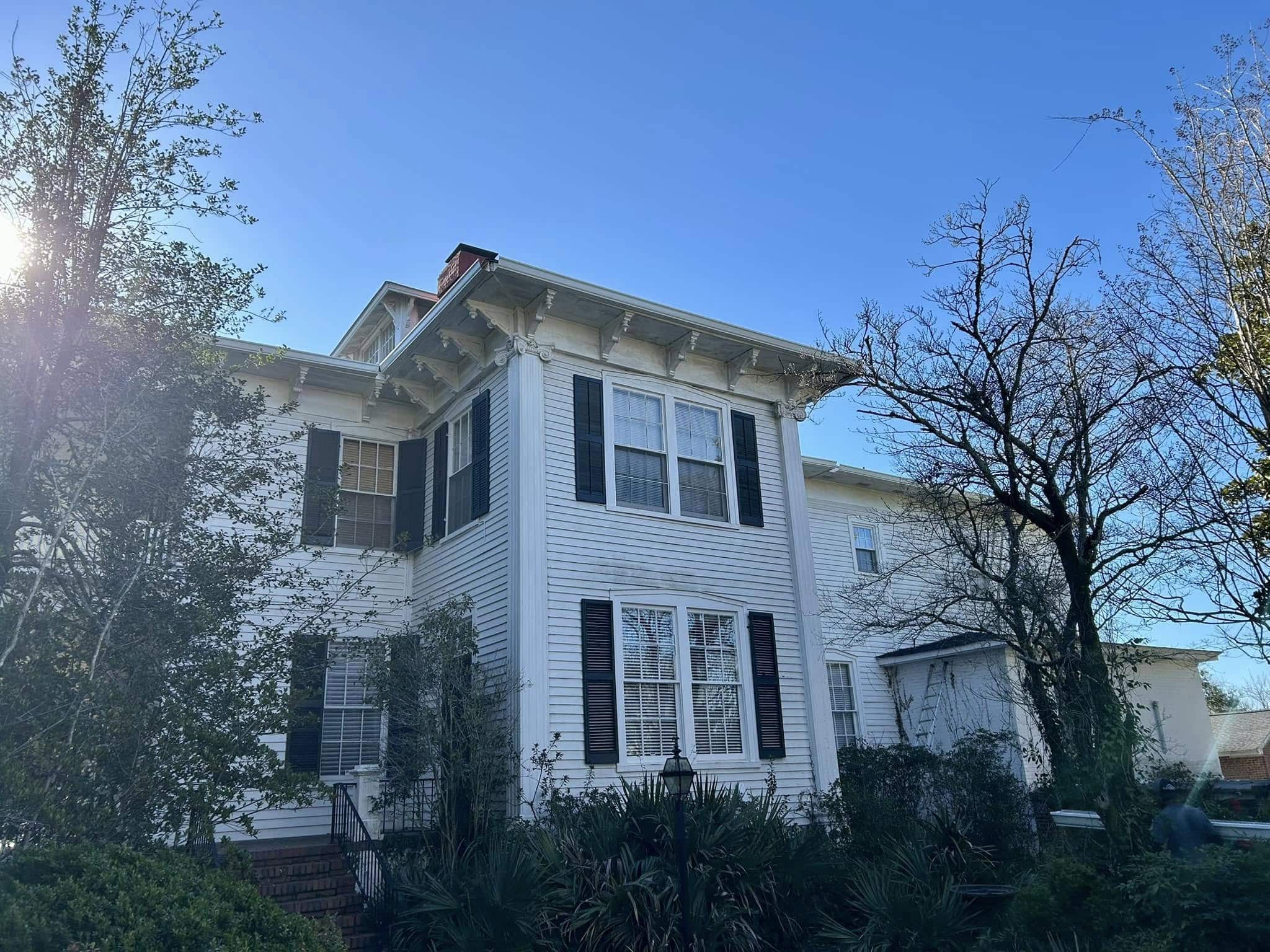
The gutter profile should complement the building after we know it can handle the roof’s drainage demands. Columbia has numerous historic and architectural districts, so some homes call for more attention to roof-edge appearance than a standard installation might receive. We offer several profiles and materials so function and architectural fit can be considered together.
K-style gutters work well on many Columbia homes because they provide a familiar residential appearance with practical capacity.
Half-round gutters create a different look and can complement traditional, historic, or custom architecture.
We also install box gutters and work with both aluminum and copper for projects where another configuration is appropriate.
That flexibility matters in Columbia because the city contains a wide range of architectural settings.
Neighborhoods such as Earlewood, Elmwood Park, Old Shandon, Cottontown/Bellevue, and Wales Garden are among Columbia’s preservation or character areas.
If a property falls within a local preservation overlay, exterior changes may deserve an additional review before the project moves forward.
We can discuss the gutter options, while the property owner should check the city’s historic preservation review guidance and confirm the requirements for the proposed work.
Appearance does not override drainage performance.
We first make sure the gutter profile and capacity suit the roof. Then we can choose a configuration that makes sense for the building.
How Do Tight Urban Lots Affect Downspout Placement?
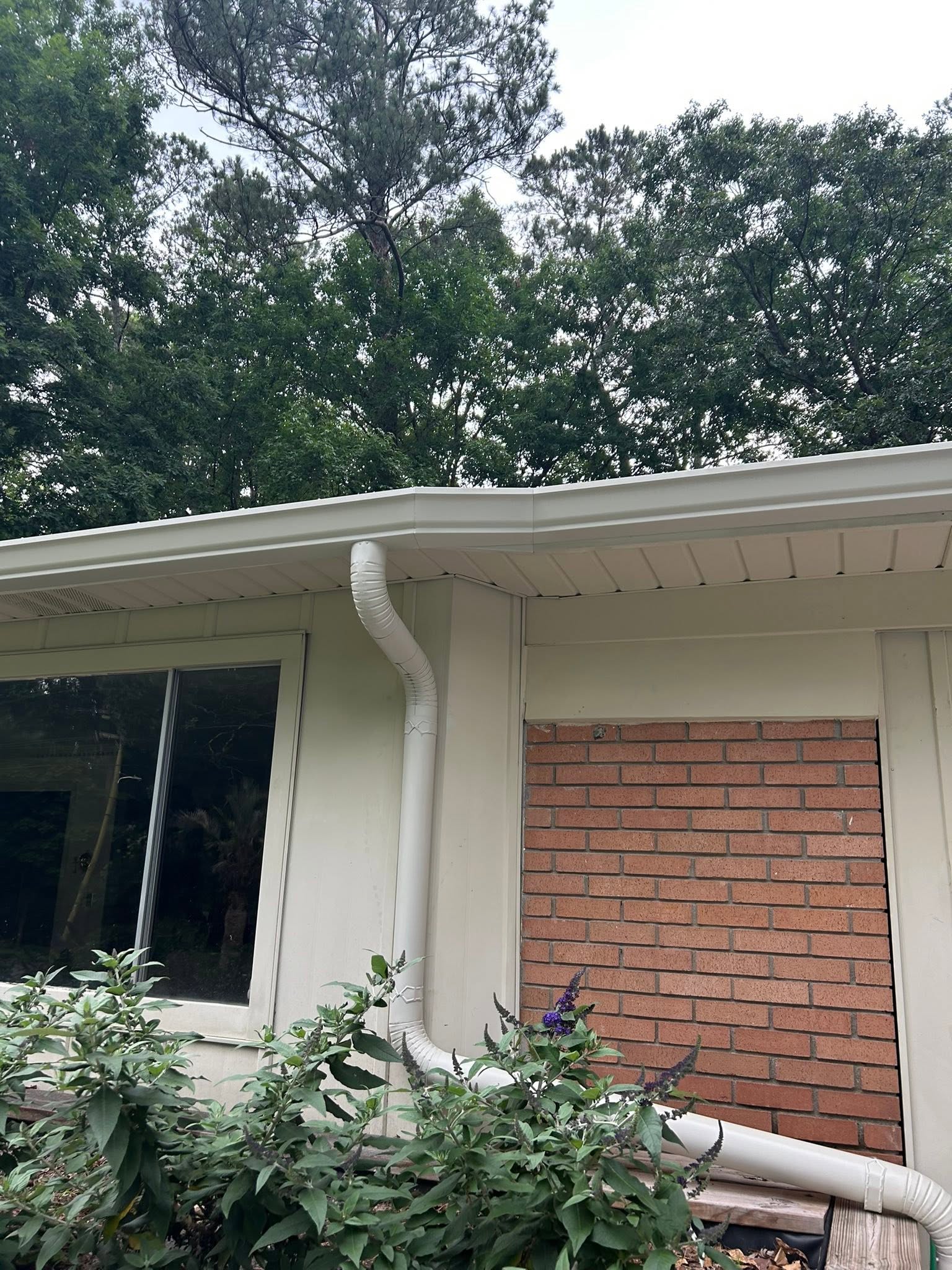
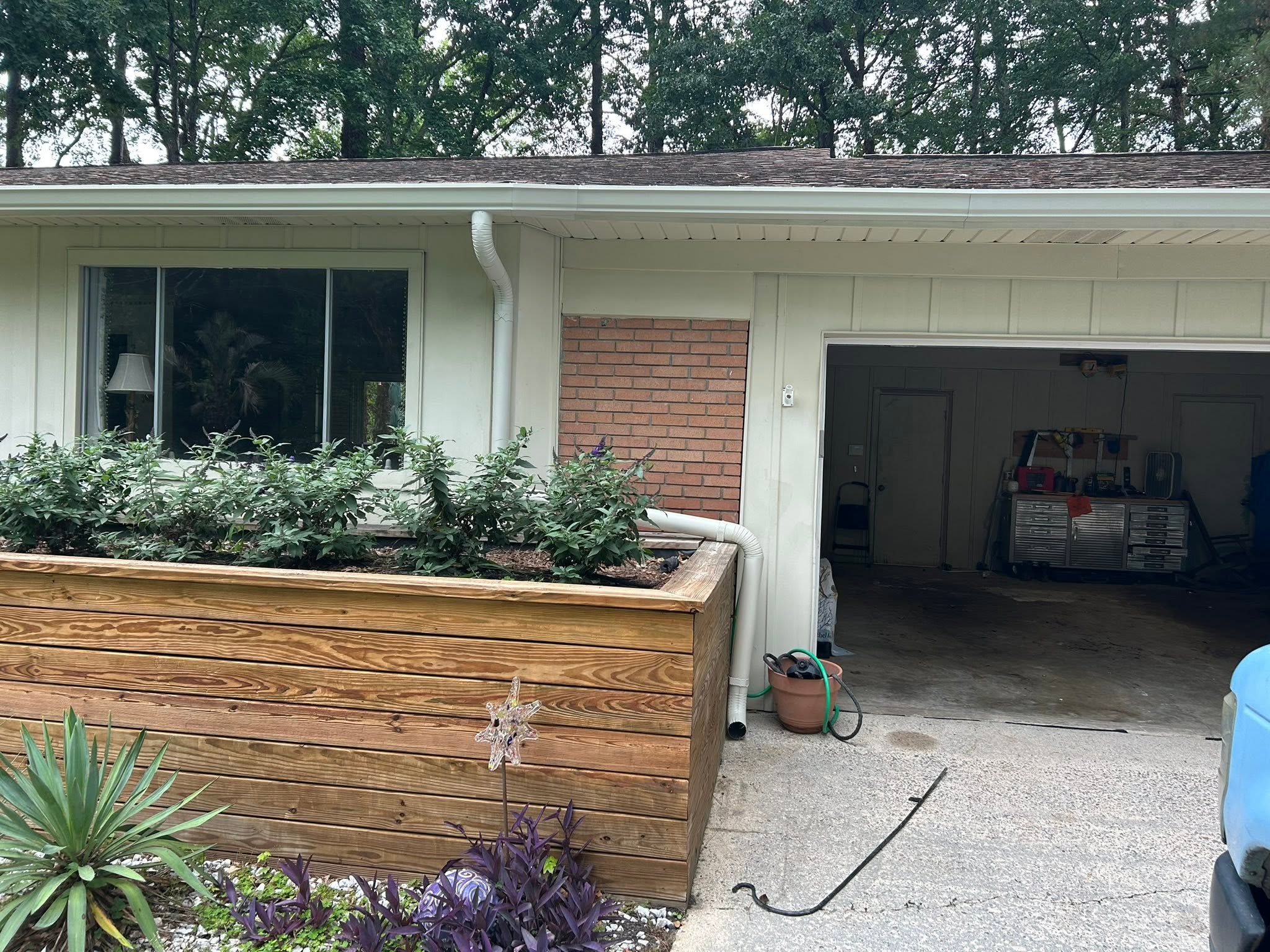
Downspout placement becomes especially important when a Columbia property has limited space around the building. Driveways, walkways, patios, landscaping, HVAC equipment, neighboring properties, and other obstacles can restrict where roof runoff can discharge. We consider those conditions before finalizing the gutter layout rather than automatically copying the previous downspout locations.
The easiest outlet location is not always the best discharge location.
For example, a downspout may reach the ground beside a walkway where concentrated runoff creates an inconvenience.
Another location may put water beside an HVAC pad or into a heavily landscaped bed.
Dense lots can create even fewer choices.
That is why we look at both ends of the drainage path.
At the roofline, we consider where outlets are needed to keep the gutter moving water efficiently.
At ground level, we look for practical discharge areas.
When possible, we plan around:
- Doors and primary walkways
- Driveways
- HVAC equipment
- Patios and outdoor living areas
- Established landscaping
- Low areas near the building
- Neighboring property boundaries
The gutter system cannot solve every grading, groundwater, or site-drainage problem.
However, rain gutter installation in Columbia, SC should avoid sending roof runoff toward an obvious trouble spot when the property offers a better option.
Columbia Water’s stormwater overview explains how runoff enters local waterways. A discharge plan should account for where roof water goes after it leaves the downspout.
Plan Your Columbia Gutter Installation
Share your Columbia property address, any planned additions, and the roof sections that need gutters. We will measure the runs, review discharge options, and provide a free on-site estimate.

How Do We Size Your Columbia Gutter Installation?
Before choosing gutter capacity, we measure the roof runs and consider how much roof feeds each section. Pitch, valleys, long runs, building height, and practical outlet locations can all change the demand on the system. We use those conditions to determine the gutter and downspout configuration instead of selecting a size from square footage alone.
Roof valleys deserve particular attention.
They combine runoff from multiple roof surfaces and direct it into a smaller area.
Long straight runs create another consideration because collected water still needs enough outlets to leave the gutter efficiently.
The Guttermen installs common residential K-style configurations along with larger and specialty profiles for projects that need another option.
We may consider factors such as:
- Roof drainage area
- Roof pitch
- Valley locations
- Length of individual gutter runs
- Number of practical outlets
- Downspout capacity
- Commercial versus residential roof size
- Existing overflow patterns
This is also why simply increasing gutter size does not solve every problem.
A larger channel can collect more water, but it still depends on outlets and downspouts to move that water out.
Commercial buildings can require an entirely different capacity discussion because their roof areas may be much larger than a typical house.
When comparing installers, ask how the proposed gutter and downspout layout was calculated.
The Building America Solution Center’s gutter and downspout guidance covers adequate sizing and routing roof runoff away from the foundation.
Why Do We Form Seamless Gutters at the Columbia Property?
We form seamless gutters at the property so each straight run can be made to the measured length of the roofline. That reduces unnecessary mid-run joints and gives us more flexibility around Columbia’s varied roof shapes. Installation still requires correctly completed corners, outlets, pitch, support, and downspouts for the system to work properly.
For seamless gutter installation in Columbia, SC, our roll-forming equipment comes directly to the job.
The gutter is formed to the required straight-run length instead of being assembled from multiple short sections.
That gives us a cleaner way to work around:
- Different roof-run lengths
- Porches and additions
- Inside and outside corners
- Architectural transitions
- Custom residential rooflines
- Larger commercial sections
Seamless does not mean there are no connections anywhere.
Corners, end caps, outlets, and other transitions still require properly installed joints.
After fabrication, our process includes setting the required pitch, securing the gutter with the chosen hangers, completing the downspouts, and checking the finished water path.
Before we consider the job complete, we carry out a final flow test and joint check.
That check confirms that water reaches the intended outlets and connections remain watertight.
If your property needs gutter installation in Columbia, SC, contact us today for a free on-site walkthrough. We can measure the roofline, review the drainage constraints around the property, and recommend a gutter system that fits both the building and the way the site handles water.

Can You Install Half-Round or Copper Gutters on a Columbia Home?
Yes. We install half-round gutters as well as standard K-style and other specialty configurations, with aluminum and copper options available for appropriate projects. We can compare appearance, capacity, architecture, and budget before selecting the profile.
Does Gutter Installation in Historic Columbia Need Approval?
Possibly. Columbia has multiple historic preservation and architectural conservation districts with exterior-review requirements. Whether a specific gutter change requires review depends on the property and proposed work, so owners in an overlay district should confirm the current requirements with the City before making visible exterior changes.
Can You Change the Existing Downspout Locations?
Often, yes. We do not have to copy a poor existing layout when the roof and property provide a better option. We consider outlet capacity, walkways, landscaping, HVAC equipment, and practical discharge areas before deciding where the new downspouts should go.
Can You Install Gutters on an Addition Without Replacing the Whole House?
Yes, when the new section can be designed to work properly with the existing roof and drainage system. We assess how the addition changes roof runoff and whether the existing gutters or downspouts need adjustment before recommending the final layout.
Compare Your Next Step for the Existing System
Return to the Columbia service guide or review our Columbia gutter company page for help choosing a contractor. If the existing system may be kept, compare gutter repairs, gutter cleaning, and gutter guards before choosing the scope of work.